

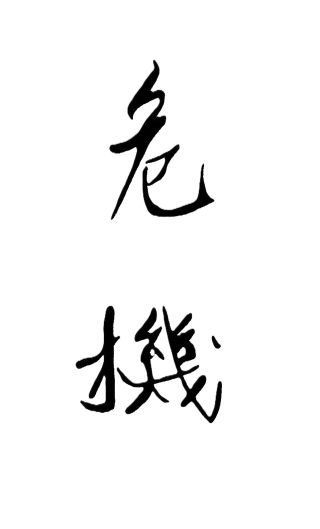
The Chinese language characters for disaster characterize risk and alternative
Supply: J. Scott Fraser, Ph.D.
The Chinese language Characters for Disaster
The Chinese language characters, Wei Ji, pictured right here, were popularly used to characterize “disaster.” They have got been popularized in speeches through political figures like President John F. Kennedy addressing global crises, through Vice President Al Gore in speeches on local weather exchange, and through a lot of motivational industry audio system on greedy alternative out of unhealthy crises.
As an example, Kennedy has mentioned:
“The Chinese language use two brush strokes to write down the phrase ‘disaster.’ One brush stroke stands for risk; the opposite for alternative. In a disaster, take note of the chance—however acknowledge the chance.”
This can be a the most important level for us all to bear in mind. Alternatively, the popularization of those disaster characters, whilst helpful in some ways, is technically mistaken. In an essay titled, “How a false impression about Chinese language characters has led many off beam” (Mair, 2009), Victor H. Mair, a professor of Chinese language language and literature, has famous:
“Whilst it’s true that wēijī does certainly imply ‘disaster’ and that the wēi syllable of wēijī does put across the perception of ‘risk,’ the jī syllable of wēijī maximum undoubtedly does no longer symbolize ‘alternative.’ “The jī of wēijī, in truth, manner one thing like ‘incipient second; the most important level (when one thing starts or adjustments)’ … With the exception of the perception of ‘incipient second’ or ‘the most important level’ mentioned above, the graph for jī on its own signifies ‘quick-witted(ness); resourceful(ness)…’”
This submit follows the preliminary submit, The Tipping Level in Disaster Intervention: A Name for a Alternate. On this collection of posts, summarizing concepts from a drawing close e-book, Disaster Intervention: The use of Tipping Issues to Reach Transformative Alternate in Remedy (Fraser, 2025), we will be able to talk about the concept that what is thought of as a disaster differs from one particular person, workforce, or context to every other. From time to time, one thing described as a disaster will likely be unhealthy and require consideration to lower its dangers. At different occasions it’ll merely sign doable important adjustments. But, the latter meanings of the nature, ji, as the standard of “quick-witted(ness) and resourceful(ness)” will maximum at all times decide the longer term a success trail for the ones engaged round a disaster level—each as purchasers and as practitioners. Crises should be embraced as “tipping issues” for higher or worse, relying on what the ones engaged at the ones issues do to transport past them. That is the crucial message of this and upcoming posts.
Embracing Crises as Issues of Transformation
This delicate shift in working out the that means of wēijī reshapes how we take into consideration crises. Fairly than just a risk with hidden alternatives, a disaster can also be noticed as a crucial juncture—a second when exchange is conceivable however no longer assured. This point of view means that crises are much less about figuring out alternative and extra about spotting a selection level, the place taking the precise motion may end up in optimistic exchange.
Crises as Selection Issues for Shoppers and Practitioners
Within the context of serving to disciplines, crises are tipping issues the place people and practitioners can both strengthen destructive patterns or grasp the danger to create sure exchange. For purchasers, a disaster can advised them to view their difficulties another way, doubtlessly transferring out of harmful cycles into optimistic new instructions. Practitioners, too, face alternatives: They are able to strengthen purchasers in stabilizing their state of affairs or empower them to include continuously counterintuitive answers, transferring what as soon as gave the impression of a hazardous second right into a transformative one.
The use of Tipping Issues for Lasting Alternate
Those that include this point of view can successfully flip crises into catalysts for enlargement. It means that practitioners and concerned others can assist the ones in disaster use those tipping issues to vary their existence paths and relationships, remodeling vicious cycles into virtuous ones. This procedure calls for flexibility, an openness to unconventional answers, and a deep working out through therapists of each and every disaster’s distinctive context and harsh cycles.
Via coming near crises as crucial, transformative moments, we shift from seeing them simply as issues to resolve and risks to restabilize to as a substitute viewing them as alternatives to reshape lives. In some way, this point of view on crises and how one can intrude in them gives a brand new lens during which to look wēijī—no longer as “risk and alternative” however as a pivotal second, a tipping level, the place transformative exchange starts.
You must be logged in to post a comment Login