


Does a Self-Bias Makes Us Higher at Resolution-Making?
People have many biases that have an effect on how we act. This sort of, the self-bias, makes us like, worth, and paintings tougher at movements when we can get advantages, in comparison to movements that get advantages people. Alternatively, a large query is whether or not this self-bias is in reality useful or destructive? Does it imply we make higher selections, or does it lead us to make deficient alternatives as a result of we get too thinking about the large praise we will get for ourselves?
A contemporary find out about grew to become to an impressive principle from animal behaviour to take a look at and resolution that query. The speculation is known as the Marginal Price Theorem (MVT) and will give an explanation for how animals get so excellent at making selections when foraging for meals. Within the find out about, Contreras-Huerta and co-workers used this principle to design a find out about that confirmed that self-bias makes us higher at making selections for our personal get advantages.
Making Optimum Choices Throughout Foraging
How do you make a decision when a task or a courting isn’t understanding, and transfer directly to a brand new alternative? Realizing when to depart can also be difficult in lots of of those contexts. The similar quandary is found in animals taking a look or ‘foraging’ for meals, akin to a squirrel amassing berries from timber. Survival is determined by this skill to collect rewards, and to do it successfully, and certainly animals are ceaselessly rather just about being optimum at making those selections in the best way that gathers essentially the most meals.
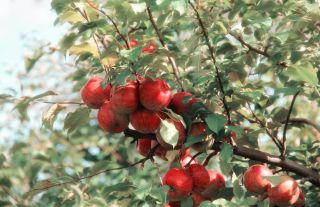
Some places have quite a few rewards
Supply: Elizabeth Tr. Armstrong / Pexels
To make selections appropriately, an animal has to consider 3 key options about how meals is unfold around the environments the place they’re foraging. At the start, now not all meals places (referred to as patches) are equivalent, for instance some timber have extra berries than others. Secondly, the extra of the meals you acquire in a patch, the fewer there’s left in it. Which means over the years the patch turns into depleted, in order the squirrel spends extra time there, it will get fewer and less berries. Finally, some spaces or ‘environments’ are richer than others, they have got loads of patches with loads of meals. The squirrel may cross to at least one park the place the timber have loads of berries in them, however then cross to every other park the place lots of the timber have only a few berries to assemble.
So when is the correct second to depart one bush and take a look at the following one? Consistent with the MVT, the most efficient time to depart is when the volume of meals you might be going in a patch has depleted to the common quantity of meals you get over the years in that surroundings. You keep longer when in a bush with loads of berries, however you spend much less time in each and every bush in an atmosphere the place there are many excellent berry timber round you, as a result of when you transfer on quicker the following bush may be filled with fruit.
Earlier paintings has proven that, to live on, animals are in a position to be nearly optimum when making those selections. However do equivalent decision-making mechanisms additionally exist in people? Earlier analysis has proven that during computer-based foraging duties, we’re just about being optimum and behave similarly to what MVT would expect. However what when you had been foraging to assist any individual else? Does the prejudice we’ve got against valuing rewards we will get for ourselves imply we forage extra (or much less) optimally when foraging for ourselves as opposed to any individual else?
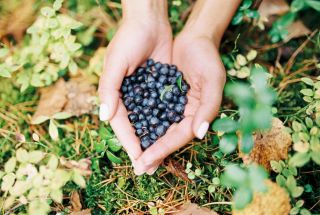
Amassing meals is a very powerful job for each people and animals
Supply: Alexander Nerozya / Pexels
Foraging for Self vs. Others
To reply to that query, researchers evolved a recreation in response to MVT the place human members attempted to assemble as many digital berries as they may for themselves and performed the sport to profit an nameless different particular person. They amassed rewards from two sorts of patches: top or low worth (i.e. what number of berries within the bush) in two sorts of environments: wealthy and deficient (outlined via the volume of top or low worth timber). All of the members needed to do was once come to a decision when to depart a patch to transport directly to the following one, however travelling between patches took a while. Crucially, part of the time, they amassed rewards for themselves, and the opposite part they amassed rewards for someone else.
Curiously, they discovered that individuals stayed longer in top worth timber than low worth ones, and left timber previous on reasonable within the wealthy environments each when foraging for self or different, however, crucially, they had been nearer to the optimum in line with MVT when making those alternatives for themselves. This ended in them amassing extra berries, and getting the next bonus fee, for themselves in comparison to the opposite particular person.
This implies that the self-bias that makes us extra delicate to our personal rewards, and makes us paintings tougher to get ourselves rewards, additionally makes us extra optimum when making foraging selections about when to leaving location to get the utmost praise we will.
Autism and Praise Sensitivity
Earlier analysis has advised that individuals with upper ranges of autistic characteristics could be much less delicate to rewards, and specifically to social rewards. The researchers had been additionally due to this fact curious about whether or not autistic characteristics affected foraging for praise for self and for different. Curiously, selections of when to depart had been related to autistic characteristics, with other people upper in those characteristics much less delicate to the price of patches and not more delicate to the surroundings. Alternatively, this trend was once simplest provide when other people foraged for self, now not for different. This demanding situations earlier perspectives suggesting that individuals with top autistic characteristics attend much less to social knowledge and feature lowered social motivation. As a substitute, it means that upper ranges of autistic characteristics could also be connected to self-bias, and a possible relief in its impact on foraging selections.
Resolution-Making Crucial Reads
Conclusion
When to depart a rewarding scenario to transport directly to every other one is a key decision-making downside that applies to many eventualities in daily lifestyles. In an exhilarating new find out about, researchers confirmed that individuals are extra optimum when foraging for self slightly than others. This offers every other demonstration of ways useful the use of theories from animal foraging could be for figuring out human behaviour highlighting that self-bias would possibly in reality function a recommended adaptation.




![VVS: Meet the Emerging K-Pop Woman Crew Set to Shine Like Diamonds [Teaser Images] – Kpoppie](https://i1.wp.com/kpoppie.com/wp-content/uploads/2025/04/vvs-man-100.jpg?w=100&resize=100,100&ssl=1 "VVS: Meet the Emerging K-Pop Woman Crew Set to Shine Like Diamonds [Teaser Images] – Kpoppie")




You must be logged in to post a comment Login