


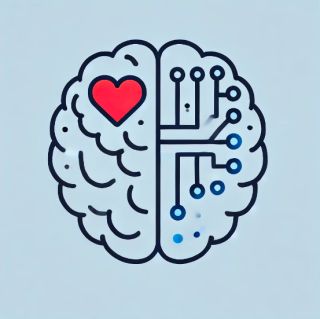
Supply: Artwork: DALL-E/OpenAI
Smarter and quicker appears to be the chant of our virtual age. And in our rush to include this computational magic, we generally tend to rejoice its astounding logical functions whilst viewing our personal emotional responses as one thing, smartly, to triumph over. We reward AI’s unwavering computing and rising rationality whilst running to suppress our “primitive” limbic impulses—our fears, wants, and intestine reactions. However what if we’ve got were given it backward? What if those fundamental emotional drives, this irreplaceable hum of the limbic gadget, are exactly what makes human intelligence distinctive and irreplaceable? Take a breath, really feel that intestine reaction, and let’s dig in.
The Cognitive Contest: The place AI Excels
As AI methods develop extra subtle, they have got confirmed remarkably adept at duties we as soon as regarded as uniquely human. They are able to analyze huge datasets, acknowledge complicated patterns, or even generate ingenious works. Their natural cognitive energy frequently exceeds our personal—and with quantum computing, this energy reaches unfathomable ranges. Imagine Google’s fresh Willow quantum chip, which finished a computation in beneath 5 mins that will take lately’s quickest supercomputers 10 septillion years—a timespan that hugely exceeds the age of the universe itself. For slightly context, here is what that appears like written out with zeros: 10,000,000,000,000,000,000,000,000,
But one thing basic is lacking: they lack the emotional underpinning that provides human concept its richness and intensity.
The Hidden Energy of Intestine Emotions
Imagine how you’re making selections. Whilst we love to assume we are purely rational actors, our alternatives are invariably coloured via emotional context. That intestine feeling a few activity candidate, the inexplicable draw towards a specific space, or the moment believe (or mistrust) of a stranger—those don’t seem to be system defects in our decision-making procedure. They are options of it, knowledgeable via thousands and thousands of years of evolution and our lived reviews.
Our limbic gadget is not only including noise to our rational ideas. It is offering crucial knowledge, serving to us prioritize what issues and discard what does not. After we really feel worry, our mind does not simply check in threat—it primes our complete cognitive gadget to concentrate on survival. After we really feel love or interest, those feelings do not simply make us really feel just right—they power us to create, discover, and innovate.
Past Simulation: Why AI Can not Really feel
AI, for all its computational brilliance, processes the entirety with the similar weight. It may analyze a love poem with the similar detachment as a climate document. It may generate artwork, however with out the emotional urgency that drives human creativity. It may acknowledge patterns in human habits however with out the visceral working out that comes from in fact feeling feelings.
This limitation is not a flaw in AI design—it is a basic feature. AI methods are natural neocortex with out the limbic basis. They are able to simulate feelings, however they are able to’t really feel them. They are able to procedure details about threats or alternatives, however with out the gut-level reaction that makes such knowledge significant to people.
The consequences are profound. Whilst AI can improve our analytical functions, it can not exchange the emotional intelligence that makes us human. A clinician’s empathy, an artist’s interest, a pace-setter’s instinct—those don’t seem to be with regards to processing knowledge. They are about feeling, connecting, and working out at a degree that transcends natural good judgment.
The Energy of Being, and the Splendor of a Human Being
Possibly we will have to reconsider our courting with AI. As an alternative of seeking to make AI extra human-like via simulating feelings, in all probability we will have to include its variations. Let AI be what it is best at—an impressive software for extending our rational functions—whilst we people proceed to convey the emotional intelligence that provides that means to these functions.
Additionally, perhaps it is time to forestall apologizing for our emotional nature. The ones “primitive” limbic responses don’t seem to be preserving us again—they are crucial to our humanity. They are what makes us able to love, creativity, and significant connection. They are what give us our ethical compass and our sense of goal.
As we spiral additional into the area of “smarter and quicker”—with quantum computer systems appearing calculations that will take longer than the age of the universe itself—we would possibly really feel moderately decreased, as though our messy human feelings are a weak spot in an age that turns out to worship Vulcan-like good judgment. However in all probability what makes us human isn’t our talent to assume logically however our want to really feel, to react, to attach. AI, for all its brilliance, is a replicate to our neocortex however won’t ever mirror the uncooked, visceral hum of the limbic. And that is the reason now not a limitation—it is a reminder of what makes us irreplaceably human.




![VVS: Meet the Emerging K-Pop Woman Crew Set to Shine Like Diamonds [Teaser Images] – Kpoppie](https://i1.wp.com/kpoppie.com/wp-content/uploads/2025/04/vvs-man-100.jpg?w=100&resize=100,100&ssl=1 "VVS: Meet the Emerging K-Pop Woman Crew Set to Shine Like Diamonds [Teaser Images] – Kpoppie")





You must be logged in to post a comment Login