


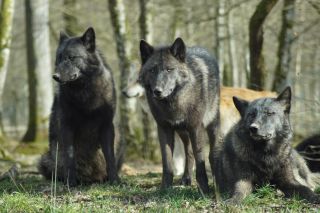
Supply: patrice schoefolt / Pexels
In these days’s human-dominated and overpopulated global, there are few, if any, nations wherein species of nonhuman animal (animals) don’t seem to be below attack via people who wantonly trespass into their houses for any selection of causes. Moreover, species-wide conservation protocols in most cases don’t center of attention on what the animals themselves really feel about what is taking place to them—that they are emotional and sentient beings—and most often forget about the well-established proven fact that every person has a singular character. As main stakeholders (some name them co-participants) in conservation techniques wherein each person’s lifestyles issues, every must have a say in what occurs to them and be allowed to specific company—to make possible choices that affect conservation and control results.
On account of those and different causes together with (1) the reintroduction of wolves into my house state of Colorado right through which every person’s sentience, feelings, and company have been brushed aside and the primary circle of relatives of wolves was once decimated via the individuals who introduced them in from Oregon as a result of they did not believe the wolves’ perspective, and (2) how their paper highlights the targets of compassionate conservation, I used to be extremely joyful to be told of an essay via researchers Émilie Edelblutte, Roopa Krithivasan, and Matthew Nassif Hayek titled “Animal company in flora and fauna conservation and control” that specializes in those and different facets of conservation techniques.1,2,3 Here is what Roopa and Matthew needed to say about their landmark paintings.
Marc Bekoff: Why did you all write this essay?
Matthew Hayek: We met at a workshop at Boston College about big-picture questions relating to sustainability on land and combating deforestation. All of us come from very other disciplines/backgrounds, however our careers all intersected with animals’ lives and complexity in numerous and fascinating techniques. Our coauthor, Émilie, made a unmarried remark in an open dialogue about how steadily wild animal conservation techniques appear to forget about that complexity. I additionally had a equivalent inclination that rules and insurance policies forget about their lived studies as properly.
MB: How does your essay relate on your backgrounds and common spaces of passion?
MH: I analysis the dimensions of animal farming and our remedy of the ones animals. Animal farming is the most important human use of land, and its enlargement is inflicting wild or herbal spaces to shrink or even disappear. We predict to peer much more of that at some point except we will jointly consume much less meat. Shrinking habitats are the most important reason for species endangerment and extinction, and it is some of the largest demanding situations that we are facing of their conservation. Émilie and Roopa got here at it from totally other angles despite the fact that!
Roopa Krithivasan: Émilie and I each have backgrounds within the social science of flora and fauna conservation. Either one of our paintings regarded as quite a lot of components that give a contribution to how and why people make selections that experience affects at the atmosphere that steadily come into war with the expectancies and targets of conservation. In doing our analysis at the conservation of leopards, wolves, and tigers in numerous portions of India, it additionally turned into glaring to us that the complexity of nonhuman animal decision-making, and the standards that pressure the ones selections, also are an important contributor to conservation results, however the animal aspect of it’s steadily more or less flattened, simplified, and homogenized in a lot of conservation observe. Like Matt stated, we have been all considering concepts of animal complexity, and the way that contributes to environmental coverage, from other however complementary angles.
MB: Who do you hope to achieve?
MH: We in point of fact do not hope to put across that somebody program supervisor, ecologist, activist, or group is doing anything else “fallacious.” What we are hoping to do, amongst they all, is encourage new techniques to take a look at animal advanced conduct, their wealthy sociality, and their internal lives. We need to display conservationists or even on a regular basis conservation supporters and fans two issues: (1) that accounting for animal company is helping us preserve animal populations but in addition (2) that animal company can display us that there are such a lot of extra issues price retaining than inhabitants numbers. Conservation too can lend a hand give protection to animal cultures and languages. It could possibly bolster sure animal feelings, beef up animal welfare, and give protection to human-animal relationships.
RK: A large a part of our paintings for me helps spotlight what I believe many flora and fauna managers already implicitly perceive, however are steadily requested to position apart or undervalue of their observe as it is traditionally regarded as unscientific or bordering at the anthropomorphic—that flora and fauna are lively members on the planet we are living in, and due to this fact wish to be handled as lively members in conservation. In different phrases, we in point of fact want as a way to acknowledge and paintings with animals’ standing as stakeholders with company, for conservation to paintings.
MB: What are probably the most main subjects you believe?
RK: One fascinating factor we have been in a position to do with this paper is to deliver in combination other disciplinary traditions that experience grappled with animals’ feelings, sentiments, selections, and cultures—inside their very own species, and with different species together with people. None of that is specifically new, however we did suppose it was once wanting reframing and reintegrating into flora and fauna control discourses.
We drew from animal prison concept, animal geography, and behavioral sciences, to give an idea of animal company that may give a extra expansive and integrative view of animals to conservation coverage and observe. It was once in point of fact attention-grabbing to sweep thru literature from throughout those disciplines to get a way of ways wealthy the interior lives and social workings of animals as various as slugs and rats and elephants might be and suppose thru what it could appear to be if we in point of fact regarded as the techniques wherein those lives might be extra absolutely regarded as in flora and fauna control.4
MB: Are you hopeful that as other folks be told extra concerning the significance of permitting animals to specific their issues of view in conservation protocols those that run those techniques can be extra open to paying attention to the animals?
MH: We’re, partly for the reason that reception to our article has been overwhelmingly sure. It looks like we expressed one thing out loud that has been on many of us’s minds operating on animal conservation. After all, that optimism must be tempered via the disaster of this second: local weather trade, habitat encroachment, species extinction, and irritating habitat high quality, welfare, cultural range, and flexibility for the surviving animals.
It is our hope that extra other folks get taken with animal conservation and that their techniques can take animals as complete, advanced, lively beings who can lend a hand form their good fortune.




![VVS: Meet the Emerging K-Pop Woman Crew Set to Shine Like Diamonds [Teaser Images] – Kpoppie](https://i1.wp.com/kpoppie.com/wp-content/uploads/2025/04/vvs-man-100.jpg?w=100&resize=100,100&ssl=1 "VVS: Meet the Emerging K-Pop Woman Crew Set to Shine Like Diamonds [Teaser Images] – Kpoppie")





You must be logged in to post a comment Login