

Supply: DSD/Pexels.
Near to each pupil of animal conduct has studied the paintings of Dr. John Calhoun, famously or infamously identified for his rodent condominium complexes like “Mouse Universe 25,” which ended in his idea of “behavioral sinks.” Dr. Lee Alan Dugatkin writes about Calhoun’s analysis in his e-book, Dr. Calhoun’s Mousery: The Ordinary Story of a Celebrated Scientist, a Rodent Dystopia, and the Long term of Humanity. I’ve learn books and papers through Dugatkin and knew I used to be in for a wild and detailed trip a few maximum arguable determine who become a science rock celebrity.
Marc Bekoff: Why did you write Dr. Calhoun’s Mousery?
Lee Alan Dugatkin: I will be able to’t recall for sure once I first encountered John Calhoun’s paintings, however the odds are excellent that it was once again in graduate faculty (within the past due Eighties) once I wolfed E. O. Wilson’s 1975 behemoth, Sociobiology. In that e-book, Wilson captures Calhoun’s paintings on inhabitants expansion and inhabitants loss of life in rodents the use of a couple of tantalizing adjectives—“well-known” and “peculiar.” Nonetheless, this primary publicity ended in not more than my storing that paintings someplace at the back of my thoughts till 2001 once I started writing the primary version of my textbook, Ideas of Animal Conduct. I sought after to offer scholars a excellent viewpoint at the historical past of conduct in nonhumans; I learn or reread a whole lot of subject material from the early years of the learn about of animal conduct. My reminiscence was once jolted, as once more I got here throughout a couple of references to Calhoun’s paintings.
Rapid ahead with reference to any other twenty years to 2020. This time I used to be writing a e-book about social networks in nonhumans once I got here throughout a chain of papers about social networks in mice. That paintings, like Calhoun’s early learn about on rats, came about in a barn (this time close to Zurich, Switzerland). And the ones research on social networks weren’t simplest about advanced social dynamics, however inhabitants expansion and rot as neatly. Identical to Calhoun’s paintings were.
This time I acted and did a deep dive into Calhoun and his paintings, and I found out that his research had been coated in The New York Instances, The Washington Submit, Time mag, Der Spiegel, and extra. “It was once a ravishing day,” learn the outlet sentence of a 1970 Newsweek tale, “a lot too pretty to spend in an administrative center. It appeared the easiest day to talk over with Dr. John Calhoun’s mousery.” The USA Senate mentioned Calhoun’s paintings on overpopulation in rodents and the results for our species, and it enshrined 3 of his papers within the Congressional Document. Web page after web page of Tom Wolfe’s 1968 e-book The Pump Area Gang—printed at the identical day his The Electrical Kool-Support Acid Check hit the stands—paid homage to Calhoun’s concept of a “behavioral sink.” Calhoun’s paintings, partly, led one of the vital writers of Catwoman to introduce the nature Ratcatcher to the cartoon. The most productive-selling youngsters’s e-book Mrs. Frisby and the Rats of NIMH could have had its beginning in Calhoun’s rat experiments.
I knew there was once no turning again. I used to be hooked and satisfied that this tale wanted to learn, and the earlier the simpler.

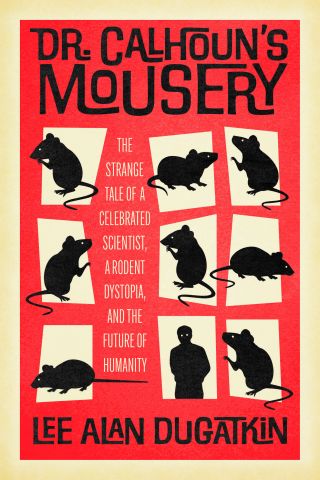
Supply: College of Chicago Press/with permission.
MB: How does your e-book relate in your background and common spaces of pastime?
LAD: As a historian of science and behavioral ecologist, with a deep pastime in psychology and anthropology, Calhoun’s tale is true up my alley. Nonetheless, even I discovered this a wild trip of a tale to investigate and write. When writing a few guy who opened an invited lecture he gave to The Royal Society with “I shall in large part talk of mice, however my ideas are on guy, on therapeutic, on existence and its evolution,” you’re about to probe the psyche of a captivating personality.1
MB: What are one of the primary subjects you imagine?
LAD: Answering this query in not up to e-book shape isn’t simple, however, right here is going. Calhoun’s overarching pursuits had been overcrowding and inhabitants dynamics in nonhumans and people. Many took his effects on experiments in rodents as a portent of doomsday in our species, however Calhoun concept another way. He got here to look the result of his paintings with rodents as prescriptive, appearing a trail ahead to stop the human inhabitants bomb from exploding. He known as himself a ℞evolutionist (word the “℞”) and his concepts “metascientific,” through which he intended the use of science to check out to know very advanced issues involving now not simply many unknowns however advanced interactions between variables. To force house that complexity, he additionally ran experiments in rats that might tinker with rodent tradition and cooperation, and in so doing, defuse a possible ticking inhabitants bomb.
In an excessively peculiar twist, Calhoun’s research of mice and rats led him to commit a lot of the later years of his profession to running at the advent of a human “international mind.” “We at the moment are on the important transition to a brand new form of guy,” Calhoun informed an target market in 1969, “one that is dependent an increasing number of on extracortical prostheses to adapt and make the most of ideas.” Calhoun was once satisfied that through linking in combination those computer-like extracortical prostheses we may be able to harness creativity and, amongst different issues, determine some way out of the overpopulation drawback. By no means one to shy clear of daring prediction, Calhoun informed this identical target market that “a coarse calculation signifies that through 40,000 years from now not up to 5 % of ingenious job can be carried out through our cortex and no less than 95 % through prostheses.”
MB: Are you hopeful that as other folks be told extra about Calhoun’s paintings they’re going to come to appreciate that it was once very thought-provoking however now not reasonably proper?
LAD: Exactly. Calhoun was once daring and far-sighted, however somewhat over the brink. He was once integrating paintings from a big selection of disciplines—ecology, psychology, psychiatry, anthropology, laptop science, human inhabitants dynamics, and extra— lengthy prior to such integration become de rigueur on the earth of each social and herbal sciences. A lot of the elemental science he did on inhabitants expansion and behaviour in nonhumans was once forged sufficient, however he overlooked the mark as a futurist predicting human inhabitants traits and human social dynamics.
You must be logged in to post a comment Login