


Ask nearly any mom what they would like for his or her youngsters, and they’re going to say, “I simply need them to feel free!” Even supposing they may have some problem specifying what they imply in better element, they don’t seem to be referring simply to the emotion of happiness. Imagine that they most probably would now not be delighted if their child was once a contented serial killer. What mothers truly need is for his or her youngsters to be prime in well-being.
However what, precisely, is well-being? Not too long ago, there were a number of magazine problems in quite a lot of instructional fields dedicated to figuring out well-being. This weblog offers the solution equipped through UTOK, the Unified Principle of Wisdom. We will get started through noting that UTOK considers well-being a central idea and price, as evidenced through UTOK’s final justification: Be that which boosts dignity and well-being with integrity. I presume maximum moms would need their youngsters to are living their lives in keeping with this mantra.
In case you glance it up within the dictionary, well-being refers to being satisfied, wholesome, and/or wealthy. This definition is beneficial in that it extends the idea that past simply feeling certain. Alternatively, the deeper that means of well-being stays unclear.
This turns into obvious after we cross to the educational literature. In opening their particular magazine factor dedicated to certain psychology and well-being, Resnik and Mercer state that “well-being is a hard assemble to clutch and outline because of its complexity and the person variation in how it’s skilled” and cross directly to listing quite a lot of controversies and other ways of conceptualizing it1. In a similar way, Jarden and Roache2 open their particular factor on well-being through announcing that “a transparent and helpful definition and conceptualization of well-being stays elusive, a state of affairs which has manifested traditionally, contemporarily, to the general public, and inside of and throughout disciplines.”
UTOK claims that it does now not must be this manner and offers us with the “Nested Type” to outline the idea that with richness and intensity in some way that accords with what moms need for his or her youngsters.

The Core Size of the Wellness-Sickness Continuum
Supply: Gregg Henriques
The Nested Type3 begins through framing the wellness-illness continuum on what we will name the “core measurement.” The core measurement has two sides, which might be emotions and functioning. Emotions confer with the subjective analysis of the way issues are going. Functioning is extra purpose and refers to how nicely the “device” is working in its context towards most popular objective states.
The use of the core measurement as a lens, we will say that prime well-being is related to feeling just right and functioning successfully, while low well-being is related to feeling and functioning poorly. As this weblog notes, the core measurement is properly captured through Walgreens’ slogan, “On the nook of satisfied and wholesome.”
The second one piece of the well-being puzzle is to understand that the core measurement is made up of 4 other nested domain names. Because of this UTOK labels it the Nested Type. The primary area is the topic area. That is how the sector seems and feels from the vantage level of the person.
Analysis has proven that we will divide subjective well-being into 4 other portions. Two of those domain names live within the primate, feeling portion of our minds (i.e., our core, experiential self), and two live within the extra self-conscious, non-public reflective portion (i.e., our egos). The 2 feeling dimensions are, now not strangely, the certain and adverse feeling states. Principally, how just right you’re feeling and the way dangerous you’re feeling are evaluated on other dimensions as a result of those are other programs.
The 2 reflective dimensions contain non-public opinions of pleasure. One is a “basic” area, wherein the person abstracts throughout their existence and offers a world indicator of existence pleasure. The opposite refers to domain-specific sides in their lives. This is the map of the subjective measurement of well-being, which is given through UTOK.
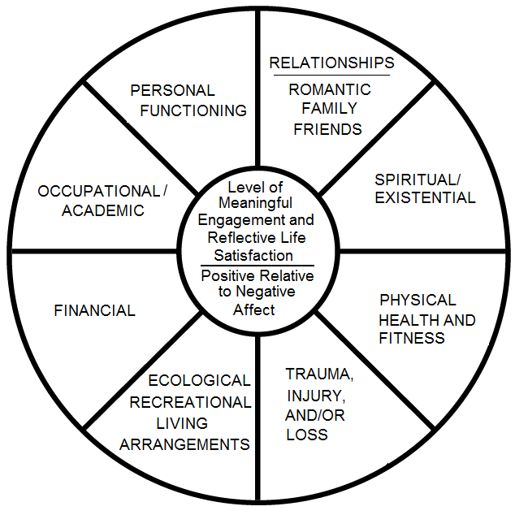
Supply: Gregg Henriques
The second one area of the Nested Type refers back to the organic and mental functioning of the person. Principally, that is how well being is classed through a clinical physician and a mental physician. A clinical physician is concerned about such things as body structure, anatomy, and illnesses. A mental physician is concerned about issues in pondering, feeling, pertaining to, or appearing.
The 3rd area of the Nested Type refers back to the environmental context. This area can be divided into two spaces. One is the bodily atmosphere, and the opposite is the social atmosphere.
The fourth area is the person who is maximum frequently lost sight of. That is the area of values. Particularly, it’s the area of the values of the evaluator. The truth that well-being and malady are value-laden constructs can cause them to complicated for other people. Alternatively, UTOK is helping us see them obviously as a result of this can be a refined philosophically-informed fashion. This is the Nested Type of Smartly-Being (and Sickness) as depicted in UTOK: The Unified Principle of Wisdom.
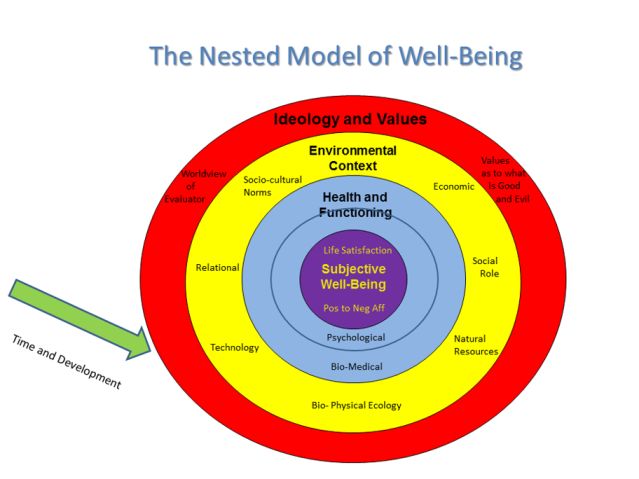
Supply: Gregg Henriques
The overall facet of the fashion places the illness-wellness continuum within the context of time and construction. This is helping us imagine dispositional dispositions like vulnerability and fragility when eager about malady and robustness and resilience when eager about wellness. Vulnerability refers back to the probability of getting issues over the years, and fragility refers to how delicate somebody is to specific forms of insults and accidents. Against this, robustness refers to how robust or impervious somebody is to accidents, and resilience refers to how temporarily somebody bounces again from damage.
So, when moms say they would like their youngsters to feel free, what do they truly imply? If we view it throughout the lens of UTOK’s Nested Type, they would like their youngsters to really feel just right and be happy with their lives, be biologically and psychologically wholesome, and are living in wealthy, protected, and supportive bodily and social environments in keeping with smart values, such that they’re powerful and resilient if and when dangerous issues occur.




![VVS: Meet the Emerging K-Pop Woman Crew Set to Shine Like Diamonds [Teaser Images] – Kpoppie](https://i1.wp.com/kpoppie.com/wp-content/uploads/2025/04/vvs-man-100.jpg?w=100&resize=100,100&ssl=1 "VVS: Meet the Emerging K-Pop Woman Crew Set to Shine Like Diamonds [Teaser Images] – Kpoppie")





You must be logged in to post a comment Login