The rage for the textile business to make use of electrical vans has begun to seem in occasions of power uncertainty. Curiously, firms declare that the usage of EV vans can save gas via as much as 40 %.
World geopolitical tensions that have an have an effect on on fluctuations within the provide and value of gas oil (BBM) are beginning to be felt via the logistics sector in Indonesia, which has prime distribution wishes. This situation encourages quite a lot of business gamers to in an instant transfer to extra environment friendly and sustainable answers.
This type of steps used to be taken via PT Primarajuli Sukses (PRS), a subsidiary of PT Ever Shine Tex Tbk (ESTI), which started enforcing the usage of electrical automobiles (EV) for its distribution operations. This implementation used to be facilitated via complete industrial electrical car ecosystem supplier, KALISTA.
“We’re responding to the problem of gas shortage via taking strategic steps to start out adopting EVs as our operational automobiles. Using 6 (six) electrical vans might be used for product distribution within the Jakarta and Bandung spaces to our finish consumers comparable to Uniqlo, Atalon, Shopee, Gojek, Clutch, Torch and Eiger. Prior to now, we have now performed trials with KALISTA for the 2 forms of vans used, with very certain effects, it used to be recorded that we have been in a position to avoid wasting as much as 40% on gas prices. As well as, in supporting the entire construction of EV-based mobility, “We additionally provide a minibus unit for worker shuttles which may be optimized for handing over items when no longer in use,” defined Ever Shine Team Director, Michael Sung.
Transition to Low Emission Logistics
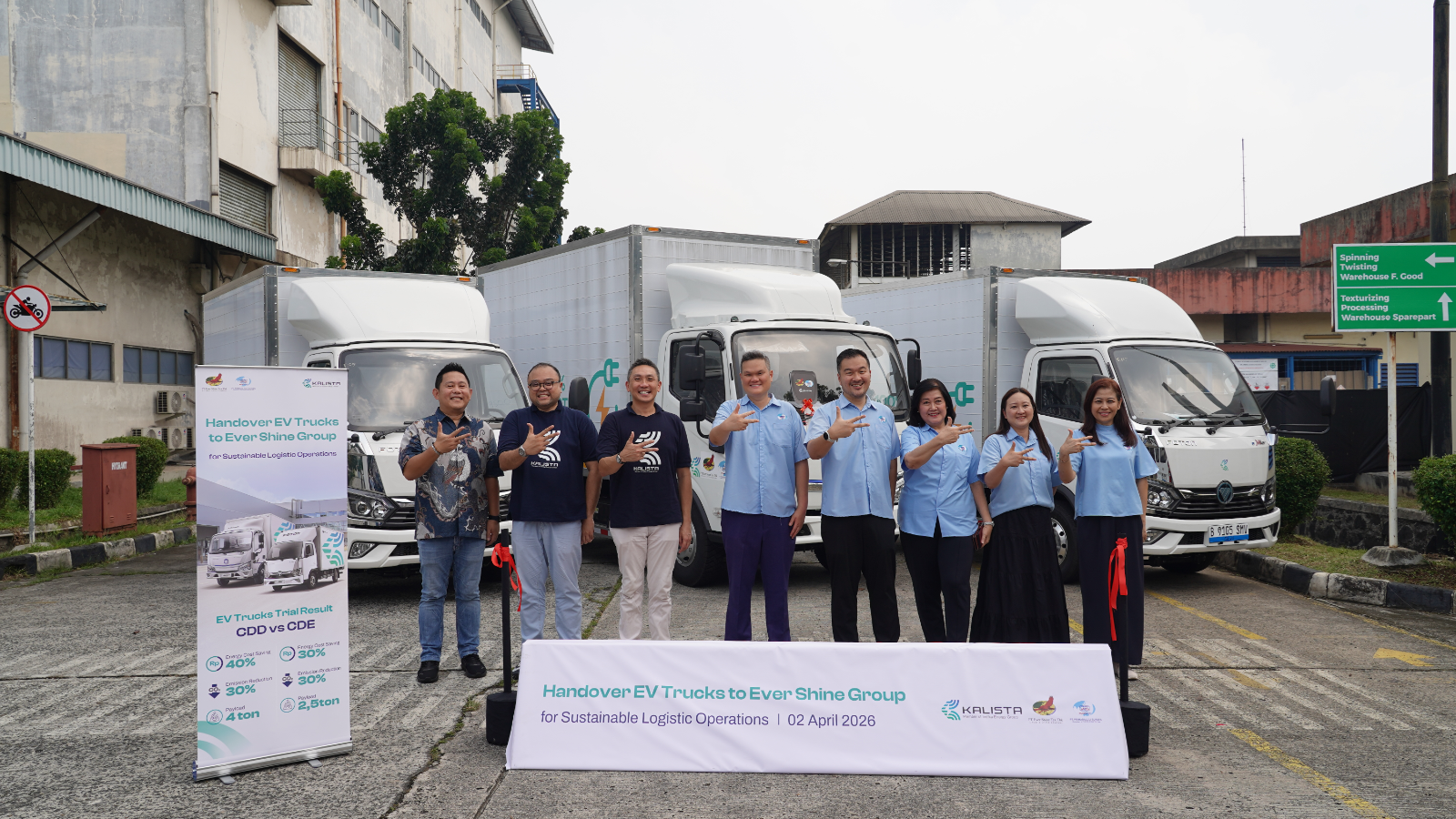

The textile business pattern of the usage of electrical vans has been carried out via PT Primarajuli Sukses and its subsidiary PT Ever Shine Tex Tbk, facilitated via KALISTA.
This step is a part of Ever Shine Team’s efforts to extend power potency whilst supporting the nationwide goal of web 0 emissions via 2060.
Up to now, round 70% of the corporate’s power wishes might be met from renewable power resources, together with solar energy crops (PLTS) with a capability of one.34 MWp and gas-based crops of one MW which were put in and PLTS section 2 with a capability of two.1 MWp which might be operational in July 2026.
In its implementation, PRS makes use of the KALIS fleet-as-a-service scheme
Possession of the unit is in KALISTA, so all sides of operational possibility and duty, together with upkeep, after-sales provider, function control, and IoT integration, are fully KALISTA’s duty, supported via the emblem.
With this, PRS can focal point extra on logistics operations and product distribution to consumers. This initiative is the primary to be carried out within the textile sector, making it a brand new reference for different textile firms to start out the transition to EVs.
You must be logged in to post a comment Login