


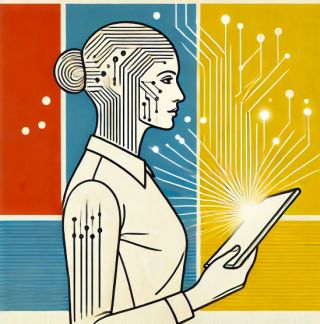
Supply: ChatGPT
For hundreds of years, the archetype of the trainer has loomed huge in human tradition—a determine status on the entrance of the study room, imparting knowledge to scholars. However within the bottom line, I might argue that probably the most tough and enduring classes are simplest once in a while taught by means of others. As an alternative, they’re self-discovered, coming up from a dynamic interaction of enjoy, mirrored image, and interest. On this mild, the position of man-made intelligence—specifically huge language fashions (LLMs)—takes on new importance. Those AI-driven techniques don’t seem to be simply repositories of information; they’re companions in our maximum human enterprise: instructing ourselves.
Past the Lecture room: The Nature of Self-Taught Knowledge
Existence itself has all the time been humanity’s biggest trainer. From finding out to stroll as children to navigating the complexities of grownup relationships, our maximum pivotal classes emerge experientially. This procedure is never linear. We attempt, fail, adapt, and develop in a cycle that formal schooling can simplest approximate. Knowledge—the synthesis of information, context, and enjoy—is deeply private, cultivated via lived moments fairly than prescribed instruction.
But, self-directed finding out calls for extra than simply enjoy. It calls for equipment to assist us replicate, prepare, and lengthen what we come across. In previous eras, those equipment had been books, mentors, and dialog. Nowadays, LLMs be offering an exceptional alternative to enlarge this procedure, making the act of educating ourselves extra obtainable, iterative, and expansive than ever sooner than.
From Static Maps to Dynamic Webs
Conventional schooling regularly items wisdom as a sequence of static maps: mounted frameworks that define information and ideas. Whilst helpful as beginning issues, those maps are inherently restricted. They try to conform to the fluid, interconnected nature of real-world issues and private interest.
LLMs shift this inflexible thought by means of remodeling wisdom into dynamic webs. Those techniques, powered by means of huge information units and complicated algorithms, don’t simply supply data—they contextualize it, attach it to comparable concepts, and adapt to the learner’s wishes. As an example, an inquiry about nuclear power would possibly result in discussions about power coverage, technological innovation, and even moral philosophy, weaving a internet of working out this is each expansive and deeply related.
In doing so, LLMs echo the best way people naturally be informed: now not via remoted information which might be introduced in anyone else’s linear collection, however via patterns, relationships, and iterative exploration. They turn out to be wisdom from one thing static and exterior right into a residing, evolving entity that freshmen can interact with at once.
The Iterative and Learner-Centric Nature of LLMs
Most likely probably the most transformative facet of LLMs lies of their iterative nature. In contrast to conventional sources, which ship mounted solutions, LLMs invite discussion. A unmarried question can spark a cascade of follow-up questions, reflections, and refinements. This iterative procedure mirrors the best way we interact with complicated issues in genuine existence, the place working out deepens over the years via cycles of inquiry and alertness.
Additionally, LLMs make finding out profoundly learner-centric. Fast get entry to to huge reservoirs of information permits people to tailor their finding out trips to their distinctive objectives, pursuits, and contexts. A biologist can dive into quantum mechanics to discover interdisciplinary connections. A scholar of historical past can discover parallels with recent geopolitical dynamics. The tempo, intensity, and path of finding out are now not dictated by means of exterior curricula however are as an alternative guided by means of the learner’s interest and evolving working out.
The Trainer and the Device
This convergence of LLMs and self-directed finding out raises an intriguing query: Who, then, is the trainer? In some ways, the solution is understated: We’re. LLMs, as tough as they’re, don’t impose wisdom. They reply, galvanize, and counsel, however it’s the human thoughts that drives the method ahead.
This partnership isn’t in contrast to the Socratic approach, the place finding out emerges from discussion. Simply as Socrates used questions to lead his scholars towards deeper truths, LLMs interact us in iterative exchanges that light up new views. They’re equipment—albeit refined ones—that enlarge our skill to replicate, attach, and create.
Reinvigorating Studying
The results of this partnership lengthen a ways past the person. Within the Cognitive Age, the place adaptability and lifetime finding out are paramount, the facility to show ourselves turns into a defining talent. LLMs democratize this capacity, breaking down obstacles of get entry to, experience, and context. They make it imaginable for someone, any place, to interact in significant, self-directed finding out.
However this new modality additionally calls for a shift in mindset. If LLMs are to satisfy their possible as companions in finding out, we should embody a extra energetic position as freshmen. Interest, vital pondering, and self-reflection transform the cornerstones of schooling—now not as summary beliefs however as day-to-day practices.
An Never-ending Invitation
Within the bottom line, the act of educating ourselves is each an historic and a newly empowered apply. Existence has all the time been our best trainer, however with LLMs as companions, we will be able to interact with its classes extra deeply, dynamically, and for my part than ever sooner than.
Merely put, the query isn’t whether or not LLMs will train us however how we will be able to use them to show ourselves. The chance is ordinary, the equipment are to be had, and the accountability lies with us. In any case, as freshmen and as people, we’re—and all the time had been—our personal very best academics.





![VVS: Meet the Emerging K-Pop Woman Crew Set to Shine Like Diamonds [Teaser Images] – Kpoppie](https://i0.wp.com/kpoppie.com/wp-content/uploads/2025/04/vvs-man-100.jpg?w=100&resize=100,100&ssl=1 "VVS: Meet the Emerging K-Pop Woman Crew Set to Shine Like Diamonds [Teaser Images] – Kpoppie")




You must be logged in to post a comment Login