


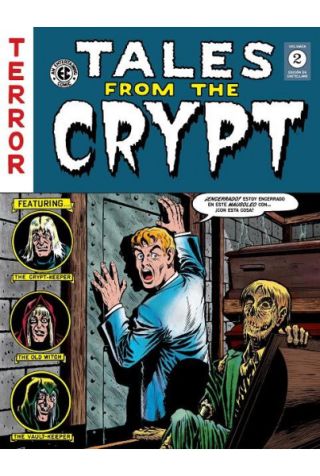
Supply: EC / Public Area
On every occasion a brand new generation comes alongside that creates a revolutionarily new method of verbal exchange, the younger glom onto it and their elders, or a extremely vocal team of them, consider it’s resulting in the ruin and smash of the younger. A time period usually implemented to such reactions is ethical panic.
I’m no longer utterly pleased with the time period ethical panic, however I’ll use it as it’s used ceaselessly by means of historians and social scientists who learn about this phenomenon (e.g. Springhall, 1998). The phenomenon isn’t actually panic within the sense of what occurs when a crowded theater catches fireplace. It’s a continual and regularly step by step rising concern or worry about harm to the younger executed by means of the brand new media.
It arises out of a herbal, one would possibly even say wholesome, neophobia at the a part of those that have lived nicely into maturity with out the brand new media, mixed with an similarly herbal and benevolent want to offer protection to the younger. One thing new that hasn’t ever been skilled prior to within the historical past of humanity could be bad; and it could be particularly bad for children as a result of we view youngsters (rightly or wrongly) as extra fragile and susceptible than adults.
The ethical a part of ethical panic enters in two techniques. Maximum such panics prior to now had been fascinated by ethical corruption of the younger. The media had been noticed as inciting violence, crime, sexual promiscuity, and/or disrespect for social establishments and conventions. The latest panic, to be mentioned in later posts, but in addition see right here, alternatively, considerations youngsters’ psychological well-being greater than morals.
The opposite, most likely extra significant, means that ethical figures into ethical panic derives from the implicit or particular assumption that adults have an ethical accountability to offer protection to the younger. The purveyors of the brand new media—the cheap-novel trade, film trade, comedian e book trade, online game trade, or on-line social media trade (relying at the generation into consideration)—are noticed as exploiting the vulnerability of the younger for the sake of riches for themselves. It’s the ethical accountability of the remainder of us, who care about youngsters, to offer protection to the morals (or psyches) of the younger from the exploits of grasping industries and their captains. It’s a compelling argument.
A not unusual assumption underlying such panics is that kids are blameless, susceptible, and missing in strength of will. By no means thoughts that they’re going out in their technique to get on the new media, spending their very own sometimes-hard-earned cash on it, actively making it a big a part of their lives, regularly sensible of their techniques of describing and the use of it, and, if any person bothers to invite, most often ready to give an explanation for what they get from it.
We now have a powerful tendency, ever extra so in recent years, to view youngsters as puppets, managed by means of societal forces, fairly than brokers of their very own conduct. In the event that they spend nice quantities of time on some process that we predict is not any excellent, we are saying they’re addicted, and we level to the media purveyors as intentionally including the addictive components to seize and hang youngsters’s consideration. We additionally make assumptions about what’s excellent for children or no longer, with out respecting and even asking for his or her reviews. We hate the concept that youngsters like higher what they make a choice themselves than what we attempt to foist on them.
How a Worry Turns into a Ethical Panic
Ethical panics regularly get up from considerations which are first of all reasonable and affordable. However intense center of attention at the considerations turns them into fears, which can be augmented and unfold as a result of worry creates selective belief and a focus. What turns out to substantiate the terror is famous, mentioned, and blown up within the observers’ minds and within the media. Proof tending to disconfirm the terror is overpassed or disregarded.
Believable tales are created to give an explanation for a hypothesized causal hyperlink between the media in query and its putative hurt to youngsters, after which the tales are introduced as proofs. The tales come to be understood as regulations of nature, so if empirical knowledge don’t supply a lot proof for a hyperlink, the tales do, within the minds of the morally panicked. Information that contradict the tales will have to be unsuitable (I’ve heard that from a couple of readers in keeping with my opinions of the newest panic—the smartphone/social media panic).
There are two ranges of media in those panics about media. One is the media that’s the goal of the panic, and different is the media that spreads the panic. Dangerous information is excellent news for promoting newspapers, magazines, or fashionable books and for drawing shoppers to newscasts, public lectures, or, in as of late’s global, podcasts. All media are out to earn a living. The media that adults are being worried about are being profitable, and so are the media that unfold and dramatize the adults’ worries.
In maximum ethical panics, some individual arises as a number one crusader. Regularly the crusader is somebody already identified to and well-respected by means of a big portion of the general public. It could be a distinguished minister, journalist, clinical physician, psychiatrist, or professor. When that individual comes out in enhance of the terror, the terror beneficial properties better legitimacy.
The crusader articulates the tales higher than maximum others may just, with a voice of simple task and authority that turns hypotheses into obvious info. The crusaders are most often no longer charlatans. maximum are folks of integrity who sincerely consider within the purpose. They spur the advent of organizations geared toward combating the hurt and lobbying with governments to make regulations designed to stop youngsters from getting access to the damaging media.
The crusaders’ claims are seductive, to the grownup thoughts, no longer simply since the crusaders are reputable and believed to have the info in hand but in addition since the answers they provide appear easy and attainable. If youngsters’ issues derive in large part from the media to which they’re flocking, all we want to do is take that media clear of them. The claims are seductive additionally as a result of they shift the blame from how we—you, I, and the society we’ve created—are treating youngsters and position it squarely on the ones grasping media corporations.
In the event you sought after to scale back petty robbery and teenage being pregnant in Victorian instances, all you needed to do was once forestall the newsletter of “penny dreadfuls” in England or “dime novels” in The us. All through the Nice Melancholy of the Nineteen Thirties you have to do the similar by means of ultimate the film theaters to youngsters beneath 18 no longer accompanied by means of an grownup. All through the the post-war Nineteen Forties and ‘50s, you have to do it, and on the identical time reinforce youngsters’ sleep, by means of preventing the sale of horror comics. If you wish to opposite the hot spike in anxiousness and despair amongst youngsters, all you wish to have to do is remove their smartphone and/or social media get entry to.
The implicit message, hardly mentioned so bluntly, is that you’ll be able to treatment youngsters’ ills with no need to maintain extra complicated issues which are meshed into the construction of the social global we adults have created. The crusaders additionally gloss over, forget about, or deny the certain beneficial properties youngsters could be getting from their selected media actions, developing the realization that ultimate it off to them would entail no loss.
Examples of Previous Ethical Panics about Youngsters and Media
Listed here are probably the most well-documented examples of ethical panics about youngsters and media over the last two centuries.
Penny Dreadfuls and Dime Novels within the Victorian Generation
Through the center of the nineteenth century, printing and distribution generation had reached some extent that fiction may well be made to be had at a worth that working-class youngsters may just find the money for. Within the U.K., within the final 1/2 of the nineteenth century, an enormous passion for children and alarm for adults had been serialized dramatic tales, printed ceaselessly in installments bought for a penny each and every. The cost was once low sufficient that youngsters may just find the money for them from cash they earned themselves, and those that couldn’t find the money for them organized to borrow them or collaborate with others to buy and proportion them.
It’s estimated that by means of 1850 there have been about 100 publishers of such fictions within the U.K. Just about all boys and a few women, particularly from the decrease categories, learn them. The tales had been usually sensationalized, proceeding episodes of the adventures of detectives, criminals, and supernatural entities.
Within the many years prior to obligatory training (which started within the U.K. in 1880), those serialized dramas arguably did greater than another societal alternate to advertise literacy amongst working-class youngsters. The language was once easy sufficient, and children realized from one every other tips on how to learn them. However grownup moralists hated them. They had been certain that the top charges of teenage petty crime in London and different towns resulted from youngsters’ studying those fictions, which gave the impression to rejoice crime. A number of the extra well-known had been Varney the Vampire; Sweeny Todd, The Demon Barber of Fleet Side road; and more than a few interpretations and expansions of the Robin Hood legend.
I believe that London gentry particularly hated tales about robbing from the wealthy to present to the deficient, however all tales that would appear to disillusioned the social order had been, by means of definition, “frightening.” It’s been mentioned by means of others, I’m no longer certain how correctly, that obligatory training arose within the U.K. no longer such a lot to show studying, as most youngsters may just already do this, however to achieve extra keep watch over over what they learn.
John Springhall (1998) quotes crusader journalist James Inexperienced as depicting the penny dreadful with the next phrases (in 1874): “He is also lurking at this very second in [your young son’s] non-public chamber, little as you observed it, polluting his thoughts and smoothing the best way that results in swift destruction.” Springhall additionally quotes William Groser, an creator of Sunday faculty academics’ manuals, as caution that “penny dreadfuls diffuse delicate poison amongst tens of 1000’s of younger readers. They bring about wreckage and havoc … and ruination to masses of our brightest and best possible lads and lasses.”
In america at the moment, the identical of the dreadfuls had been referred to as dime novels or 1/2 dimes, in line with their dimension and value. The marketing campaign in opposition to them resembled the U.K.’s marketing campaign in opposition to dreadfuls. In step with Springhall (1998), the Christian moralist Anthony Comstock (well-known for the Comstock regulations selling censorship of virtually anything else having to do with intercourse), characterised the dimes and half-dimes as “corrupting the younger, glamorizing felony conduct, and answerable for the nervous building up of younger criminals in our towns lately.” He campaigned till his demise to place the publishers into chapter 11.
Any other crusader, political economist Harriet Marineau, condemned the tales as “filled with animal interest and defiant lawlessness, trials of celebrated malefactors, insanity, and suicide” and contended they had been “tough in getting ready the younger for convict lifestyles.” An instance of the way the click promoted the panic was once a information tale attributing a 14-year-old boy’s suicide to “a duration of psychological aberration brought about by means of studying dime novels” (West, 1985).
The Movement Image Panic of the Nineteen Thirties
New generation within the past due Nineteen Twenties made speaking films imaginable. Hollywood temporarily capitalized. The primary feature-length speaking movie was once The Jazz Singer, launched in 1927. From then on, particularly in the course of the Nineteen Thirties, the film trade soared. It additionally came about that this glory duration for films coincided with the Nice Melancholy, which threw massive numbers of folks out of labor and into poverty. This was once additionally the duration that adopted at the heels of the crime mob generation caused by Prohibition within the Nineteen Twenties. No longer strangely, the Nineteen Thirties noticed a expansion in crime, together with (most commonly petty) crime by means of youngsters.
So, two issues came about concurrently. The film trade soared, and juvenile delinquency soared. Crusaders had been fast to look the correlation and jumped to the belief that the films had been inflicting the delinquency.
It in reality was once a glory duration for Hollywood. With massive audiences, admission worth may well be saved very low, which ensured continuation of enormous audiences. The flicks depicted a glamorous, romantic, thrilling global very other from the dreary one out of doors the theater. The flicks had been an get away, most likely a explanation why for residing at a time when for plenty of it was once challenging to look one more reason. It wasn’t simply youngsters who flocked to the films, adults did too, however youngsters reportedly spent extra time there than adults (Forman, 1935), and the moralists’ considerations had been most commonly about youngsters. The children had been gazing films that had been made basically for adults and, to the moralists, weren’t suitable for children.
In step with knowledge reported on the time, the typical child from about age 8 to 18 watched roughly 50 films a yr, and, in the event you subtracted out the fraction who weren’t ready to visit films, the typical for the others was once nicely over 50 a yr (Forman, 1935). It was once not unusual additionally in the ones days for children to stick within the theater to look at the similar film greater than as soon as, for no further fee. The celebrities—together with Gary Cooper, Edward G. Robinson, James Cagney, Marlene Dietrich, Greta Garbo, and Jean Harlow—had been glamorous.
The panic was once so fast and powerful that, already in 1931, gangster films, which have been noticed as most deadly, had been banned outright in Worcester, Massachusetts; Syracuse, New York; Evanston, Illinois; and West Orange, New Jersey (Springhall, 1989). The worry additionally led, by means of 1930, to the founding of a analysis group, the Movement Image Analysis Council, to behavior medical research geared toward figuring out the results of films on youngsters.
The scientists, related to main universities, carried out no longer simply surveys and interviews however even experiments wherein youngsters watched films whilst they had been stressed out as much as units to look how their our bodies had been reacting, or had been stressed out right through the next evening’s sleep to look how gazing a film would possibly disrupt sleep. Youngsters in reform faculties had been interviewed to know how their film gazing would possibly have landed them there and had been regularly used as the themes in experiments akin to the ones simply discussed.
The research had been printed in 8 dull volumes, which few folks learn, and which proved little or no. Independent analyses of them confirmed the research to be poorly designed and the effects to be combined and inconclusive. However Henry James Forman, a real crusader, was once tasked with the task of condensing the findings for the general public. The outcome was once a unmarried quantity titled Our Film Made Youngsters.
For the e book, Forman culled out the ones bits of the analysis that gave the impression to enhance the thesis that films had been affecting youngsters for the more severe and introduced the ones bits with out the tedious main points of technique or how small and combined the results had been. For instance, he summarized the result of interviews of women housed in “an establishment for woman intercourse delinquents” (Do you know that the ones existed?) by means of claiming that most of the women attributed to films “a yearning for luxurious, cabarets, wild events, and males making like to them.” Forman went directly to excursion the rustic, denouncing the movie trade. A headline saying his file in Albany learn: “Movie—A college for crime.” (Springhall, 1998).
Scientific journals additionally rang the alarm. Dr. Mary Preston wrote within the Magazine of Pediatrics (1941) that three-quarters of the youngsters she studied had been “addicted” to unhealthy radio and films, which disturbed their sleep and consuming and made them emotionally callous. She wrote: “This atrophy leaves scar tissue within the type of a hardness, an intense selfishness, even mercilessness, proportionate to the quantity of publicity and its play at the local temperament of each and every kid.”
The Put up-WWII Comedian E book Panic
Comedian books have been round for a very long time, however the past due Nineteen Forties and early ‘50s resulted in serialized comics, regularly within the horror style, with titles like The Hang-out of Worry, The Vault of Horror, and Stories from the Crypt. Standard additionally had been superhero comics, which gave the impression to glorify violence. Youngsters spent numerous time with those comics. They traded them, mentioned them, acted them out. All this was once horrifying to a few adults. It gave the look of this type of desolate process, taking youngsters’ time clear of extra wholesome interests whilst, on the identical time, adults meant, inuring youngsters to violence or jangling their fearful techniques in bad techniques.
The main anti-comics crusader was once psychiatrist Dr. Fredric Wertham. In his e book Seduction of the Blameless: The Affect of Comedian Books on These days’s Formative years (1954), he contended that the emerging crime and immorality amongst early life on the time stemmed at once from the affect of comics. No longer simply horror comics, however all comics depicting violence or crime or sexuality or anything else that fell into his class of immorality, had been his goal. He even performed into the anti-gay prejudices of the time by means of suggesting that Batman and Robin had been homosexual enthusiasts, and the ones comics had been subtly encouraging that class of sinful alliance.
In testimony prior to Congress, geared toward banning all such comics (which might were the vast majority of all comics), Wertham reportedly mentioned: “I feel Hitler was once a newbie in comparison to the comic-book trade. They get the youngsters a lot more youthful.” Wertham’s e book received much more affect at the public when it was once condensed within the pages of Readers Digest. In spite of everything, Congress didn’t outlaw comics however as an alternative burdened the comics trade right into a duration of self-censure. Even so, Wertham and different crusaders had been a hit in getting regulations regulating the manufacturing and gross sales of comedian books in 13 states (Mintz, 2004).
The Video Recreation Panic of the Nineteen Nineties and Early twenty first Century
I will be transient right here, as maximum of you studying this essay have lived thru this one. As youngsters, particularly boys, glommed onto video video games, a hue and cry rang out in regards to the hurt the video games had been causing. I will even be transient as a result of I wrote about the ones alarms—particularly the claims in regards to the video games being addictive and inflicting violence—and the proof countering the ones claims years in the past, in essays right here and right here.
I cited in the second one of those, as exemplifying the fear-mongering, an editorial within the New York Put up by means of Dr. Nicholas Kardaras beneath the headline, “It’s Virtual Heroin: How Displays Flip Youngsters into Psychotic Junkies,” filled with outrageous incorrect information however more than likely soaked up by means of readers of the Put up. As I identified within the first of the ones essays, in each Australia and america, makes an attempt to legally ban or keep an eye on video video games failed when the Perfect Court docket of the respective nations tested the proof of damage and located it missing.
Now, in 2025, the panic about video video games has lessened, partially on account of the rising analysis proof of extra get advantages than hurt from such video games (see my posts right here, right here, and right here), however most commonly, I think, since the video games were round lengthy sufficient that many oldsters grew up taking part in them and lots of nonetheless play them.
That’s what occurs with ethical panics about youngsters’ selected kinds of media. They arrive and cross with each and every technology. When a brand new type of media or leisure first seems, it’s frightening to the adults, however by the point the children who glommed onto it grow to be adults with their very own youngsters, it’s now not noticed as frightening. In fact, the primary panic as of late is ready youngsters and smartphones, particularly youngsters’ makes use of of social media on smartphones. That worry, too, will fade prior to lengthy, and worry of a few not-yet-invented media will change it.
I listen it now. “Take into accout the blameless excellent previous days when probably the most dreadful factor we youngsters did was once to proportion texts, footage, and movies with one every other on our telephones?”
Concluding Ideas
As you may have guessed, this put up is designed as a lead-up to a long run put up (most likely my subsequent one), in regards to the smartphone/social media panic that has been simmering for a number of years and exploded with the newsletter of Jonathan Haidt’s The Worried Era. (For my critique of that e book, see right here.) This newest panic follows the script of all of the others I’ve simply described.
And now, I welcome your reactions. What youngsters’ actions provoked panic whilst you had been a child? How did you maintain it then? What do you call to mind it now? Psychology These days does no longer permit feedback in this platform, however I’ve additionally posted this essay as a Substack letter, so you’ll be able to can proportion your ideas and questions there.





![VVS: Meet the Emerging K-Pop Woman Crew Set to Shine Like Diamonds [Teaser Images] – Kpoppie](https://i0.wp.com/kpoppie.com/wp-content/uploads/2025/04/vvs-man-100.jpg?w=100&resize=100,100&ssl=1 "VVS: Meet the Emerging K-Pop Woman Crew Set to Shine Like Diamonds [Teaser Images] – Kpoppie")




You must be logged in to post a comment Login